Reflections on a recent visit to an exhausted Israel: Despair, Elections and Hope
- meretzaustralia
- May 15
- 4 min read

This was my fourth visit to Israel since October 7, and each visit has felt profoundly different from the one before it.
My previous trips focused on two things: the fight to bring the hostages home, and the immense effort to rebuild the devastated communities of the south and north. I was even in Israel during Iran’s first direct drone attack. Yet nothing prepared me for the feeling that accompanied this visit.
This time, I encountered a country that is simply exhausted.
Not only from war itself, but from nearly three years of living in a constant state of trauma, uncertainty, and internal fracture. Israel continues to fight enemies on multiple fronts, but increasingly, the deepest battle feels like the one taking place within Israeli society itself. The resilience Israelis are known for, and often pride themselves on, feels deeply worn down.
Almost every conversation I had carried the same undertone: emotional fatigue, disillusionment, and quiet despair.
A close friend spoke to me through tears about her son, who has been fighting since October 7, first in active duty and then in reserve service. Today, like thousands of other soldiers, he is living with severe PTSD. The suffering is his, but it is also carried by the entire family around him. She described how, during one of the recent sirens, he spiralled into a traumatic episode, and all she could do was hold him. Not the family, not the psychologists, seem able to truly help him anymore. The only place he finds some relief is with the men from his reserve unit, because they are the only ones who understand what he has experienced.
As I listened to her, I saw not only the pain of a mother, but the exhaustion of an entire generation of Israelis who have given everything they have to the country, and are still waiting for leadership that recognises the scale of the sacrifice.
Another friend, whom I joined at the weekly protest in Habima Square, described a growing sense of hopelessness among the people around him. The feeling that ordinary Israelis continue to carry the burden, financially, emotionally, physically, while the political system remains disconnected from their reality. The recent conflict with Iran felt, in his words, like living through a game of Russian roulette. Buildings around him were destroyed, civilians were killed, and many people are left feeling that there is no long-term vision guiding the country, only political survival.
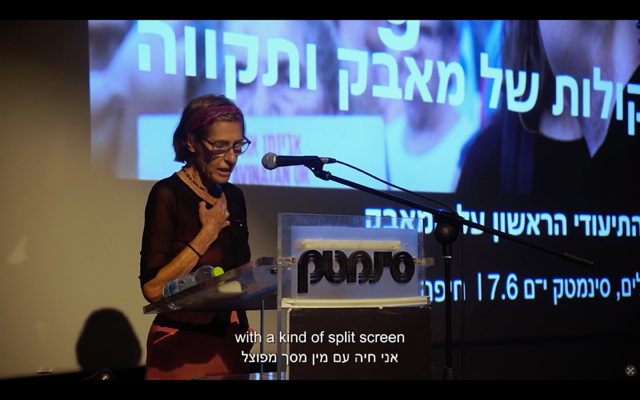
When we first arrived at Habima Square, only a few hundred people stood there. But slowly the square filled. Families of fallen soldiers spoke from the stage, alongside the parents of Itay Chen z”l, who was killed and taken hostage on October 7, and whose body was returned only recently. His father, Ruby, spoke emotionally about going to the Knesset to demand a State Commission of Inquiry into the failures surrounding October 7, only to be physically attacked by someone repeating the now familiar rhetoric that absolves political leadership of responsibility while placing all blame on the military and judiciary.
For me, that moment captured something much larger than one protest.
It reflected the growing fracture within Israeli society itself.

The atmosphere in Israel today often feels dangerously close to a culture war between brothers. Public discourse has become increasingly aggressive and toxic. Political divisions are tearing through families, friendships, and communities. Many Israelis feel that the public good is being sacrificed in favour of political preservation, while those who serve, work, and contribute continue carrying an ever-growing burden.
The debate surrounding military exemptions has become symbolic of this broader crisis. At a time when reservists have spent months and years away from their homes and families, the fight to preserve exemptions from service feels, to many Israelis, like a betrayal of the most basic principle of shared responsibility.
At the same time, I also encountered deep frustration and alienation among Arab Israelis, many of whom feel increasingly excluded from Israel’s political and social future. Even within large parts of the opposition, there remains reluctance to openly legitimise political partnership with Arab parties. That exclusion carries profound consequences, not only morally, but politically.
One of the most confronting parts of this visit was realising how dramatically the mental health crisis continues to expand.
Through United With Israel, we have been running mental health support initiatives for communities in northern Israel. Initially, we believed these projects would serve as temporary emergency support until the government established proper long-term systems. Instead, the need has only intensified. Since the escalation in the north, Hezbollah has continued attacking northern communities almost daily, even following the ceasefire with Lebanon. Families who returned home are trying to rebuild their lives under constant sirens, fear, and instability.
The emotional exhaustion is everywhere.
That is why we continue asking our community to stand with the people of Israel, not only in solidarity, but in practical support. Every product purchased through United With Israel, and every donation made, directly helps fund therapy programs, support groups, and mental health services for individuals and families who simply cannot carry this burden alone any longer.
And as I write these words, it's been announced: Israel once again stands on the brink of another election.
Not because of the ongoing war.
Not because of the failure to rehabilitate the north and south.
Not because of the deepening economic or social crisis.
But because of political battles surrounding military exemptions.
The overwhelming feeling I brought home with me is that Israel is no longer fighting only for its physical security. It is fighting for its identity, for the values that will define the country in the years ahead.
For those of us who still believe in an Israel that is Jewish, democratic, liberal, and grounded in the spirit of its Declaration of Independence, this is not a moment to stand on the sidelines. The next elections may prove to be among the most consequential in Israel’s history. The continuation of the current political trajectory risks pushing Israel into a profound moral, social, and economic crisis, one that will inevitably impact not only Israelis, but Jewish communities around the world and the already rising tide of global antisemitism.
And yet despite everything, I returned with one emotion stronger than despair: hope.
Hope that from this exhaustion and pain, a different future can still emerge.
Hope that more Israelis will recognise that the story of the country is not yet finished.
And hope that it is still possible to choose another path forward.